















 En
En
 12 min read
Many new e-commerce sellers fall into a common trap: they assume that the more orders they get and the higher the sales volume, the more profit they’ll naturally make. But reality often hits hard—when they tally up the numbers at the end of the month, the profit isn’t nearly as impressive as expected. In fact, they might just break even—or worse, end up in the red.
So, what’s going wrong? It’s not that you don’t know how to sell. The real issue is the “invisible fulfillment costs” quietly eating away at your profits. Warehousing, packaging, shipping, returns… every step costs money. But because these costs are scattered and not always obvious, they’re easy to overlook.
For early-stage sellers with limited resources and small teams, blindly throwing money at operations can quickly lead to a vicious cycle of “the more you sell, the more you lose.” Instead of waiting for a cash flow crisis to hit, it’s way smarter to build a healthy, efficient fulfillment system from day one.
That’s why we’ve put together 10 practical, easy-to-implement strategies—specifically for new e-commerce teams. They’ll help you spend your money wisely from the very first order and keep your profits firmly in your pocket.
Wise Choice of Fulfillment Model: In-house, Outsourced, or Hybrid?
The choice of fulfillment method directly impacts your cost structure, operational flexibility, and customer experience. Currently, there are three main fulfillment models, each with its own applicable scenarios and advantages:
In-house Fulfillment
This is the model often adopted by many startup sellers—handling inventory, picking, packing, and shipping processes in-house, either by the seller themselves or with hired staff. The advantage of in-house fulfillment is greater control over inventory, shipping speed, and service quality, which is especially suitable for sellers with lower order volumes, fewer SKUs, and a desire to save on outsourcing costs. However, as orders increase, in-house fulfillment can face challenges like rising labor costs, insufficient warehouse space, and pressure to ship during peak periods.
Third-Party Logistics
When your business enters a growth stage, outsourcing to a third-party logistics provider often becomes a more cost-effective choice. 3PL companies typically have established warehousing systems and nationwide or even global distribution networks, allowing them to reduce shipping costs through economies of scale, while freeing up your team to focus on marketing and product optimization. The downside is that you lose some control over fulfillment details, and if you choose the wrong service provider, you may face delays or inconsistent service.

Hybrid Fulfillment
An increasing number of e-commerce businesses are opting for flexible configurations—entrusting certain products to 3PL providers (such as regular inventory or bestsellers) while handling others in-house (such as customized products, fragile items, or high-margin core SKUs). This model allows you to control critical processes while sharing the load of daily operations with 3PL providers, balancing cost control and service optimization.
Summary Recommendation:
It’s recommended to start with small-scale in-house fulfillment in the early stages. As your orders grow, evaluate and consider adding 3PL services. The hybrid model is ideal for medium-to-large sellers who need to flexibly manage seasonal fluctuations or complex product lines. Choosing the right fulfillment model is like establishing the first line of defense for your cost control.
Mastering Fulfillment Costs
Have you ever had this feeling: even though you’re receiving plenty of orders, when you tally up the numbers at the end of the month, you find you haven’t made much profit and instead feel more exhausted? The real problem may lie in the “fulfillment costs” that you’re overlooking. Warehousing, packaging, shipping, and labor are all real costs, and these small amounts can accumulate quietly enough to eat up your profits.
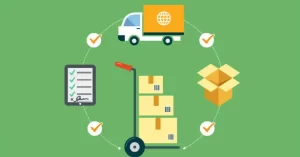
The key step to solve this problem is: stop relying on gut feelings and start calculating the data. Below are three key metrics you should review at least once a month:
Cost per Order (CPO) = Total Fulfillment Costs ÷ Number of Orders
This is the most critical metric, indicating how much it costs you to fulfill one order (including labor, packaging, warehousing, shipping, etc.). If this number is high, it could suggest inefficiencies in your operations or that one specific area is dragging down your costs.
Cost per Box (CPB) = Total Costs ÷ Number of Shipped Boxes
This is useful for products that require multiple boxes for shipping, such as large or multi-item combinations. For example, if a single order initially required one box but now needs two, your labor and shipping costs will double, which clearly isn’t cost-effective.
Shipping Cost per Order = Total Shipping Cost ÷ Number of Orders
This measures your shipping costs. It’s a metric that is often overlooked, but shipping is one of the easiest ways for profits to slip away. Remote areas, heavy products, or unreliable logistics providers can all drive up the shipping cost per order.
Recommendation:
Create a simple Excel spreadsheet to track key data such as shipping costs, product sales, etc., on a monthly basis, ideally broken down by product and channel. This way, if you notice a sudden spike in a particular metric, like shipping costs increasing dramatically, you can quickly investigate the cause, whether it’s due to a price hike from the logistics provider or an error in weight input. Additionally, compare this data with that of others or with last month’s numbers, so you stay on top of things and can optimize in real-time. In short, businesses can afford to make mistakes, but costs can’t be left to chance. The sooner you start tracking costs meticulously, the longer and more stable your business will be.
Enhancing Transparency
Transparency is the first step in reducing return rates. Many returns stem not from the product itself but from “expectation gaps.” The solution is simple—clearly communicate product information. The more customers know about the size, material, function, and usage scenarios before purchasing, the less likely they are to make a mistake, which naturally reduces return rates.
Images and videos must be authentic, clear, and comprehensive. Don’t rely on customers’ imagination to understand the product. High-definition, multi-angle photos and real-life videos can effectively represent the actual product, helping customers visually confirm whether it suits their needs. This can significantly reduce returns based on reasons like “not like the picture” or “not as good as I imagined.”
Return policies should not be too rigid or too lenient. If the return policy is too lenient, customers might return products freely; if it is too strict, disputes may arise. The best approach is to have a clear process with reasonable conditions, supported by a reliable customer service system that helps resolve usage issues, preventing negative reviews and returns before they happen.
Optimizing Order Merging
In e-commerce operations, merging multiple orders into one shipment is an effective way to reduce fulfillment costs. Especially when customers place multiple orders, shipping each order separately not only increases packaging material costs but also leads to wasted shipping expenses. Optimizing order merging can help reduce the number of shipping boxes, thus lowering overall packaging and logistics costs.
Specifically, the system should have an automatic order merging feature, where the system can automatically identify and merge multiple orders from the same customer placed within a short period of time into one package for shipping. This not only reduces the packaging materials required but also makes better use of shipping space, improving delivery efficiency.
In addition, merging orders can reduce volumetric weight charges for air or courier shipments, as many logistics companies charge based on the volume or weight of the package. By reducing the number and size of packages, you can lower shipping costs per order and further enhance cost-effectiveness.
Utilizing Free Trade Zones (FTZ)
If your cross-border e-commerce business requires importing large quantities of goods from overseas, Free Trade Zones (FTZ) are a strategic resource that should not be overlooked. Simply put, an FTZ is a special area located within customs supervision but is considered “outside” of the domestic region. Goods entering an FTZ are not considered formal imports, meaning you can enjoy various tax and customs clearance benefits, helping to reduce your costs directly.

Tax Payment is Deferred, Providing Greater Cash Flow Flexibility
By placing goods in a Free Trade Zone, you do not need to pay customs duties immediately. You only pay duties when the goods are sold and enter the domestic market. It’s like a mortgage for your goods—giving you flexibility to use funds for other activities, like marketing or stocking, instead of tying up your capital in taxes upfront.
Export Processing with Duty Exemption
If you simply bring goods into the FTZ, label them, pack them, or assemble them, and then re-export them, no customs duties are applied to this processing. It’s like using Chinese resources for value-added processing and earning profit without paying any duties—perfectly legal and especially suitable for e-commerce businesses engaged in foreign trade or OEM (original equipment manufacturing).
Potential Savings on VAT and Consumption Taxes
Some FTZ policies are even more favorable, allowing not only customs duties to be deferred but also potentially exempting you from paying VAT and consumption taxes. This can be especially beneficial for high-taxed goods, such as mobile phones, wine, and luxury items, where the tax savings can be quite substantial, directly boosting your profits.
You can make a large purchase and store it in a bonded warehouse, but when you sell the goods, you clear them through customs and pay taxes on a per-sale basis. This saves on storage costs and prevents you from having a large inventory tied up with taxes that you can’t sell. It’s ideal for e-commerce, where the pace is fast, and inventory pressure is high.
Here’s an example:
Let’s say you import a batch of electronics worth $1 million from Southeast Asia. Under normal procedures, when the goods enter China, you’d have to pay a 10% customs duty and a 13% VAT, totaling $230,000—putting a significant strain on your cash flow.
But if you go through a Free Trade Zone (FTZ), things are much more flexible. You can store the goods in a bonded warehouse within the FTZ and not pay the taxes upfront. For instance, if you’ve sold half of the goods, you only need to pay taxes on the sold portion, which would be $115,000. You can defer the rest of the taxes until the remaining goods are sold.
This essentially gives you a “breather”—you pay half of the taxes initially, freeing up funds that you can use for other things, like advertising, promotions, or restocking, putting your money to better use.
In short, it’s “sell first, pay taxes later,” which makes cash flow management easier, reduces pressure, and allows for faster profits.
Summary
In e-commerce operations, fulfillment is the most labor-intensive part. From order processing to picking, packing, and shipping, every step needs someone watching over it. One slip-up can cause errors, backlogs, and slower delivery times. To maintain fulfillment efficiency, many sellers end up hiring more staff or running overtime, keeping their operating costs high.
In reality, most of these fulfillment tasks can be handled through system automation and outsourced services. Features like order consolidation, automatic waybill printing, inventory synchronization, and exception alerts all run far faster and more reliably on software than by hand. Even better, you don’t have to build your own system or warehouse—outsourcing fulfillment to a one-stop platform like DropSure is the easiest, most efficient solution.
DropSure integrates automation tools, warehouse management, and carrier networks into a single platform, creating an end-to-end process where “an order’s placed, and you don’t lift a finger—your customer gets their package.” No extra hires, no worrying about peak-season surges, and you save on fixed warehousing and packing costs. It’s the ideal model for cross-border sellers aiming for low-asset, high-efficiency operations.