
















 En
En
 14 min read
If you’re running an online store or just starting to build your e-commerce business, product selection is the most crucial (and time-consuming) decision you’ll make. Choose the right products, and your store will thrive like a rocket-powered success; choose the wrong ones, and you might end up with unsold inventory, wasted ad spend, and painful clearance sales.
Product selection isn’t just about picking what looks good—it requires strategy, data analysis, and a keen market sense. Today, we’ll break down the complete product selection process to help you avoid pitfalls and find truly profitable products for your store!
Step 1: Define Your Store’s Positioning to Stay on the Right Track!
Before Selecting Products, Ask Yourself: What Do You Want to Sell?
Choosing winning products isn’t about picking something that “looks good.” It requires a clear direction and strategy. Your store’s business model directly affects your product selection approach. If you pick the wrong model, marketing and operations can become unnecessarily difficult.
Here are three common store models and their ideal product selection strategies:
One-Product Store: Scale a Winning Product to the Top
This model focuses on a single high-demand product, using targeted marketing and aggressive advertising to dominate the market. The key is finding a problem-solving product with high demand and manageable competition, then pushing it through Facebook, Google Ads, or TikTok for rapid growth.

Best Products for One-Product Stores:
● Functional products that solve a clear pain point (e.g., neck massager, smart water bottle)
● Trendy items with rising social media interest (e.g., TikTok and Instagram viral products)
● Unique, eye-catching products that spark curiosity (e.g., LED sneakers, automatic stir-fry machine)
Caution: This model is high-risk. Once ads stop, sales may drop sharply. Ensure your product has a large enough market and some level of repeat purchases or upsell potential.
Niche Boutique Store: Build a Brand & Increase Customer Loyalty
Unlike one-product stores, boutique stores curate a collection of products that align with a specific aesthetic or lifestyle, leveraging high quality and branding to increase perceived value and customer retention.

Best Products for Boutique Stores:
● Uniquely designed, visually appealing accessories (e.g., minimalist bracelets, vintage rings)
● Products that fit a specific lifestyle (e.g., eco-friendly home goods, premium fitness gear)
● High-value, high-repeat-purchase categories (e.g., skincare, personalized gifts)
Caution: Boutique stores take longer to establish and require consistent branding and quality to build a loyal customer base. This model is not ideal for quick-profit strategies.
Category-Specific Store: Dominate a Profitable Niche
This model focuses on a specific niche market and offers a wide range of products within that niche, allowing customers to make one-stop purchases.
For example, a pet supply store wouldn’t just sell collars—it would offer beds, food, smart feeders, and more.
Best Products for Category-Specific Stores:
● Growing niche markets (e.g., smart home gadgets, wellness and self-care products)
● Passionate customer communities (e.g., pet supplies, baby care, outdoor adventure gear)
● Products that bundle well for upselling (e.g., camping gear sets, complete coffee brewing kits)
● Caution: You need deep market research and strong supply chain support to ensure a consistent product selection and long-term success.
Step 2: Can This Product Actually Make Money?
It’s not enough for a product to be easy to sell—it also needs to be profitable. Many beginners pick a product that looks promising, only to find that competition is intense, profit margins are too low, and advertising costs eat up all earnings. In the end, they are forced to clear out inventory at a loss.

Before committing to a product, you need to calculate its revenue potential and ensure it is worth the investment.
A simple formula to evaluate product profitability:
Product Profitability = Market Demand × Profit Margin × Compliance
These three factors determine how much money a product can actually generate. Let’s break them down.
Market Demand: Balancing Demand and Competition
Even if a product has high demand, extreme competition can shrink profits and increase advertising costs. On the other hand, if demand is steady and competition is manageable, the product has real potential.
How to Analyze Market Demand
Check demand:
● Google Trends – Look at search trends to see if the product is gaining popularity.
● Amazon & eBay Sales Data – Analyze sales volume of similar products.
● Social Media Trends – Search TikTok, Pinterest, and Instagram for trending products.
Check competition:
● Google & Facebook Ads – Search for the product and see how many ads are running. If competition is high, advertising costs will likely be expensive.
● SEO Keyword Analysis – Use tools like Ahrefs, SEMrush to check keyword competition and avoid overly saturated markets.
● Competitor Analysis – Look at Shopify, Amazon, and independent stores to assess the number of competitors and pricing strategies.
Ideal Product Market
A high-demand, low-competition market presents the best opportunity. If demand is strong but there are few strong sellers, the product is worth further research.
Profit Margin: Does the Math Work?
A product that sells well but has weak profit margins is not worth pursuing. Many sellers work hard for months only to realize they were barely breaking even after advertising costs.
How to Calculate Profit Margins
Formula:
Profit = (Selling Price – Product Cost – Shipping – Operating Costs) × (1 – Platform Fees – Taxes)
Key cost factors:
1.Product Cost – Supplier price
2.Shipping Cost – International and last-mile delivery fees
3.Operating Costs – Advertising, website maintenance, customer service
4.Platform Fees – Amazon or eBay commission fees if applicable
5.Taxes – VAT, customs duties, or other regional taxes
Golden Pricing Rule
● Ideal product price = three times the product cost
● Example: If a product costs $15, the selling price should be around $45-$50 to ensure profitability.
Avoid Low-Margin Products
If profit margins are below 30 percent, advertising costs could eliminate any earnings. Aim for at least a 50 percent profit margin to cover marketing expenses and secure a sustainable business model.

Compliance: Avoid Legal and Policy Issues
One of the biggest risks in dropshipping is selling a product that performs well, only to be banned due to legal or regulatory violations.
How to Ensure Compliance
Avoid Intellectual Property (IP) Infringement
● Check USPTO (U.S. Patent & Trademark Office), EUIPO (European Union Intellectual Property Office) to ensure the product does not violate trademarks or patents.
● Avoid selling replica or branded products, as major brands actively report violators.
Meet Market Regulations
● Electronics – Must comply with CE, FCC, RoHS certifications for entry into the U.S. and EU.
● Skincare & Supplements – Require FDA approval to avoid legal risks.
● Children’s Products & Toys – Must meet CPSIA (U.S. Child Safety Standards) for regulatory approval.
Avoid Restricted Products
● High-risk items such as weapons, adult products, medical devices, or any product violating platform policies can lead to account suspension.
● Check Facebook and Google Ads policies to ensure the product is eligible for advertising.
By verifying compliance before launch, sellers can prevent issues that could result in product bans, legal action, or business disruptions.
Step 3: Product Selection Strategies for Different Store Models
Different store models require different product selection approaches. Choosing the right strategy based on your resources and goals will help you maximize profitability and avoid unnecessary competition.
Large Sellers: Competing in High-Demand Markets
Large-scale sellers with strong supply chains can target popular, high-demand product categories, even if competition is fierce. They leverage bulk purchasing, low-cost logistics, and efficient fulfillment to dominate price-sensitive markets.
● Best strategy: Compete in mainstream markets with high sales volume.
● Key advantage: Lower costs due to supplier relationships and economies of scale.
● Risk: Requires significant inventory investment and price wars with competitors.

Small & Medium Sellers: Targeting Profitable Niche Markets
For small to mid-sized sellers, the key is to avoid oversaturated markets and focus on high-demand, low-competition niches. Finding unique, problem-solving products in untapped markets increases the chances of building a successful brand.
● Best strategy: Sell niche products with steady demand but fewer competitors.
● Key advantage: Lower advertising costs and better profit margins.
● Risk: Requires market research to identify the right niche and audience.
One-Product Store: Scaling with a Viral Product
One-product stores rely on a single trending item with strong demand and a clear unique selling proposition (USP). Success depends on high-converting ads and viral marketing, particularly on TikTok, Facebook, and Instagram.
✔ Best strategy: Find a pain-point-solving, attention-grabbing product.
✔ Key advantage: Faster brand awareness and rapid sales growth.
✔ Risk: Once the trend dies or ad costs rise, sales may drop sharply.
Ideal products:
Functional, problem-solving gadgets (e.g., smart water bottles, posture correctors)
Eye-catching, unique items (e.g., LED sneakers, automatic kitchen tools)
Social media trending products (e.g., viral TikTok gadgets)
Niche Boutique Store: Building Brand Loyalty
Boutique stores curate a cohesive product line within a specific theme, focusing on brand identity and long-term customer relationships. This model is ideal for high-margin, aesthetic, or lifestyle products.
✔ Best strategy: Sell products that align with a specific aesthetic or lifestyle.
✔ Key advantage: Higher pricing power and repeat purchases.
✔ Risk: Requires strong branding and content marketing to build trust and loyalty.
Ideal products:
Unique jewelry, accessories (e.g., minimalist bracelets, vintage rings)
Sustainable & eco-friendly products (e.g., reusable home goods, high-end fitness gear)
Premium skincare, giftable items (e.g., luxury candles, custom-made products)
Step 4: How to Price Your Products for Profit and Sales
Pricing too low cuts into profits, while pricing too high drives customers away. So, how do you set the right price?
The Simple Pricing Formula
Selling Price = Cost × 3
For example, if your product costs $17, its ideal selling price should be around $50. Here’s why:
- Advertising costs typically take up one-third of the selling price.
- Additional costs include shipping fees, platform commissions, and operational expenses.
- The remaining amount is your actual profit.
Avoid Low-Profit Products
If your profit margin is under 30 percent, advertising costs can easily wipe out your earnings. Aim for a 50 percent or higher profit margin to ensure sustainable growth.
Step 5: How to Handle Logistics in Dropshipping
Don’t worry about the logistics problem, Dropshipping is easy!
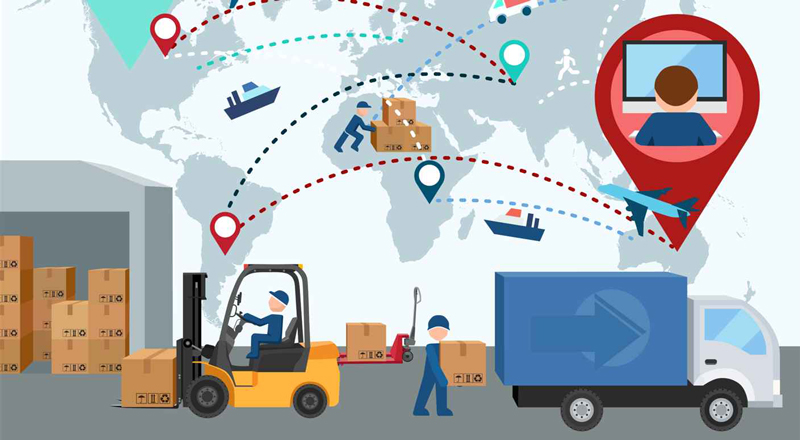
Hey, when you are doing Dropshipping, the logistics is a big headache. Customers in Europe and America have been spoiled by Amazon FBA, they are used to receiving goods in 2 days. But we have this cross-border shipping, goods are still across the ocean, the customer waited for a long time that the temper immediately came up, maybe a direct refund to go away. How can we let customers wait comfortably, happy to buy it?
Don’t panic, don’t panic, the following a few tricks, safekeeping let you take the logistics problem easily:
Use the local overseas warehouse, the delivery is no longer slow
If you have some particularly good, stable sales of explosive goods, you may wish to get an overseas warehouse directly in the target market. In this way, the delivery time of goods is greatly reduced, and customers can receive the goods within a few days of the order. Receive the goods when the customer that happy ah, the goodwill of your store is not rubbing up!
Advance notice of logistics time, so that the customer’s heart is clear!
We do not want to hide, and so customers find the slow delivery and then explain it is too late. In the product page to clearly write the expected delivery time, to give customers a pill of peace of mind. Customers have a clear idea, naturally, will not be unclear about the situation and give us a complaint.
Provide expedited delivery, so that customers are free to choose
Some acute customers ah, after the order is expected to receive the goods immediately. At this time, DHL, FedEx, these expensive but fast courier companies can come in handy. We can not only meet the needs of customers, greatly enhance their shopping experience, but also incidentally charge a little “expedited fee”, so that logistics can also earn us a little money.
People should know that if the logistics problem is not solved, the conversion rate and repurchase rate will be affected. Those smart sellers have long thought of a good way to layout in advance, the delivery of this matter into their own competitive advantage! We also need to act quickly!

Step 6: How to Choose Competitive Products
Avoid oversaturated products. High competition leads to price wars, cutting into profits. Instead, focus on products with a strong competitive edge.
Strategies for Finding Winning Products
● Customized Products – Offer personalization options such as engraving or custom designs to make your products stand out. Examples: custom jewelry, personalized gifts.
● Emerging Niches – Stay ahead of trends in technology, sustainability, and smart products. Examples: AI-powered gadgets, eco-friendly materials.
● Niche Markets – Instead of following mainstream categories, find a specific, in-demand niche. Examples: smart pet accessories, personalized home decor.

Choosing unique and innovative products reduces direct competition, protects your margins, and makes your brand more recognizable in the market.