















 En
En
 10 min read
The increasing internal competition and the sharp decline in seller traffic have led many to seek new growth opportunities and channels. Recently, the American e-commerce platform Chewy announced that it is opening its doors to Chinese sellers, offering three cooperation models for sellers to choose from: Dropship, Procurement , and Import. Among these, the Dropship model is similar to Temu’s semi-managed model, where sellers are required to maintain inventory in the U.S., while Chewy sets the prices and handles logistics, with sellers only needing to supply the goods.
Over the course of its development, the cross-border e-commerce industry has given rise to a variety of outbound models: from the initial policy regulation model, to later fully-managed platforms, independent sites/DTC, industrial cluster collaborations, and even comprehensive ecological outbound expansion. The approaches have become increasingly diverse as the market environment evolves. In response to the various outbound models prevalent in today’s cross-border e-commerce industry, we will compare and analyze the different models.
Platform E-commerce Models
For the majority of sellers, especially newcomers and beginners in the cross-border e-commerce industry, relying on third-party platforms such as Amazon, Temu, AliExpress, Shopee, and others is a common approach. These platforms provide essential traffic and infrastructure support. Let’s take Amazon and Temu as examples:
Amazon Platform Model

To enhance the trustworthiness and visibility of your products, you can apply for A+ Content certification or establish a dedicated Brand Store. These features allow you to present your brand more professionally, potentially increasing conversion rates.
However, these services are not free; you need to invest in them. Additionally, Amazon charges a referral fee, typically ranging from 6% to 15% of the product’s selling price, depending on the category. It’s crucial to adhere strictly to the platform’s guidelines, as violations can lead to account suspension or other penalties.
Temu Fully-Managed Model

In this model, sellers focus solely on product production and supply, sending goods to Temu’s designated domestic warehouses. From product listing, store operation, marketing promotion, order processing, to logistics and delivery, the Temu team handles everything on behalf of the seller. This means you don’t need to worry about the intricate operational details; your primary responsibility is to ensure product quality and stable supply. Temu’s commission rates vary between 5% and 10%, depending on the product category.
Both models have their advantages and disadvantages, which we will explore further below.
Advantages:
Traffic Advantage: Platforms come with an existing user base, reducing the difficulty of customer acquisition. For instance, Temu rapidly attracts customers through social media viral marketing.
Low Barrier to Entry: Suitable for beginners to quickly monetize without the need to build their own websites or invest in technology.
Logistics Convenience: Platforms integrate warehousing and logistics services, such as Amazon’s Fulfillment by Amazon (FBA) program.
Disadvantages:
Profit Compression: Commissions, advertising fees, and logistics costs can accumulate, resulting in profit margins of less than 10% for small and medium-sized sellers.
Regulatory Constraints: High risk of platform policy changes; for example, Amazon has experienced waves of account suspensions.
Intense Competition: Severe homogenized competition leads to short product life cycles.
Independent Website Model (DTC)
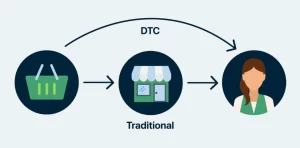
In simple terms, the Independent Website Model, also known as Direct-to-Consumer (DTC), involves selling products directly to consumers by establishing your own branded website, thereby bypassing intermediaries. This approach allows you to have complete control over brand image, pricing strategies, and customer experience.
This model fosters a direct and close communication channel between you and your consumers. Without relying on major platforms or intermediaries, you can showcase your products directly to customers, adjust brand tone as needed, and even experiment with various interactive strategies. Such autonomy not only makes your brand more distinctive but also enables you to convey your core values precisely, making each customer feel like they’ve received a VIP ticket, experiencing your dedication and sincerity.
Most importantly, you gain absolute control over pricing and customer experience. You can adjust prices flexibly based on market demand and brand positioning, without worrying about price fluctuations caused by intermediaries. Through detailed data analysis, you can quickly capture consumer preferences and needs, allowing you to make thoughtful adjustments in product development, promotional activities, and even after-sales service, ensuring every customer feels that exclusive care.
Additionally, an independent website provides a stage to showcase your personality. You can design the website interface and shopping process according to your style, creating a unique user experience. Whether it’s the website’s visual effects, functional design, or every aspect of customer service, you can fully display your brand’s charm. This approach gradually increases consumer trust and recognition of your brand.
Advantages:
Brand Control: Independent websites grant merchants complete authority over their brand, allowing for customized website design that showcases brand personality and establishes a unique brand image, thereby enhancing brand recognition.
Data Ownership: With independent websites, all customer and sales data belong to the merchants. This ownership enables them to optimize marketing strategies, enhance customer experience, and implement precise marketing based on these data insights.
Increased Profit Margins: By operating through independent websites, merchants can avoid commissions taken by third-party platforms, leading to higher profit margins.
Customer Relationship Management: Independent websites allow merchants to establish direct, long-term relationships with customers, enhancing customer loyalty and eliminating platform-imposed restrictions on customer interactions.
Flexible Pricing and Promotional Strategies: Merchants have the flexibility to set pricing strategies and design promotional activities according to their own needs, without being constrained by the rules of third-party platforms.
Disadvantages:
Difficulty in Acquiring Traffic: Independent websites require merchants to invest more effort in promotion and attracting traffic, unlike third-party platforms that come with a substantial user base. Merchants need to rely on methods such as search engine optimization (SEO), social media marketing, and paid advertising to drive traffic.
Higher Initial Investment: Building and maintaining an independent website necessitates a certain amount of capital investment, including website development, server leasing, security measures, payment gateways, and logistics systems, resulting in a higher entry barrier compared to third-party platforms.
Technical and Operational Challenges: Operating an independent website requires technical support in areas such as website optimization, data analysis, payment processing, and security. Without relevant experience, merchants may encounter significant challenges.
Intense Competition: Although independent websites avoid platform restrictions, they face greater direct competition, especially in terms of traffic acquisition and brand promotion, with competitors potentially coming from around the globe.
Full-Managed and Semi-Managed Models

In recent years, the cross-border e-commerce industry has seen the rise of managed models, prominently represented by platforms like TikTok Shop, SHEIN, AliExpress, Shopee, and Lazada. In a full-managed model, sellers primarily focus on supplying products, while the platform handles operations, logistics, and customer service. For instance, Temu’s early model followed this approach. Conversely, in a semi-managed model, sellers retain certain responsibilities, such as pricing, while the platform assists with specific operations. An example is AliExpress’s “overseas fulfillment” service.
Sellers can choose between full-managed and semi-managed models based on their product sources and supply chain capabilities. Below is an analysis of the advantages and disadvantages of both models:
Advantages:
Reduced Operational Complexity: These models are suitable for manufacturers with strong supply chains but limited e-commerce experience, allowing them to focus on product development and supply.
Rapid Market Entry: Leveraging platform resources can shorten the trial-and-error period, enabling quicker adaptation to market demands.
Disadvantages:
Limited Profit Margins: In full-managed models, sellers often have low bargaining power, leading to reduced profit margins. In semi-managed models, sellers may need to bear logistics costs, impacting overall profitability.
Inventory Risks: Stocking products in overseas warehouses requires significant capital investment. If the turnover rate is low, it can lead to increased financial risks due to unsold inventory.
Distribution Model
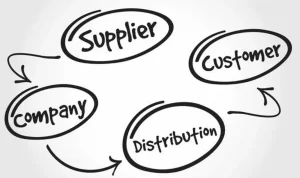
The distribution model leans more towards B2B businesses or those with stable product sources, facilitating bulk sales through agents, wholesalers, platforms like Alibaba International Station, or HaiBei Distribution on Chuhai.com.
Overall, the distribution model is more suitable for merchants with stable supply sources or those primarily targeting the B2B market. By collaborating with agents, wholesalers, or platforms like Alibaba International Station and HaiBei Distribution on Chuhai.com, merchants can achieve bulk sales, thereby reducing logistics costs per unit and leveraging a stable customer base to mitigate risks associated with market fluctuations. However, this model also has its drawbacks. For instance, due to price pressures from intermediaries, profit margins are often limited. Additionally, establishing direct brand influence is challenging, as the connection between the merchant and end consumers is relatively weak.
Therefore, when choosing the distribution model, it’s essential to weigh the advantages of large-scale sales against the potential impacts on brand building and profit margins. Additionally, consider whether you have sufficient supply and channel resources to support the long-term development of this model. This approach will help you find the most suitable position in a competitive market.
Advantages:
Scale Sales: Suitable for large orders, reducing per-unit logistics costs.
Risk Diversification: Relies on a stable customer base, reducing the impact of market fluctuations.
Disadvantages:
Low Profit Margins: Price pressures from intermediaries limit profit space.
Brand Dilution: Difficult to establish direct connections with consumers.
DropSure: Enhancing Stability and Profitability in Your Dropshipping Business
In the realm of cross-border e-commerce, selecting the appropriate overseas model is crucial for a company’s profitability. With the market’s continuous evolution, the dropshipping model, known for its low cost and high flexibility, has become the preferred choice for many sellers. However, the key to success lies in partnering with a reliable platform.
DropSure stands out as a leading dropshipping platform, offering a comprehensive suite of services from product procurement and order processing to rapid shipping. This enables sellers to focus on business growth without the concerns of backend logistics. Whether you’re a startup seller or an expanding enterprise, DropSure provides customized branding services and a global warehousing network, ensuring your products reach customers swiftly and efficiently.
Whether you’re a startup seller or an expanding enterprise, DropSure can provide you with customized branding services and a global warehousing network, ensuring that your products reach your customers as quickly as possible.