
















 En
En
 7 min read
Yet for every success story, there are countless sellers who discover—often too late—that what sells well in one country can completely fail in another. The reason is rarely logistics or pricing alone. More often, the real barrier is culture.
Cultural expectations shape how consumers perceive value, quality, safety, aesthetics, messaging, and even trust. Ignoring these differences turns product selection into guesswork. Understanding them turns it into strategy.
In this article, we’ll explore how cultural differences impact cross-border dropshipping product selection—and how smart localization can transform the same product into a market-ready winner.
1. Why Culture Matters More Than Sellers Expect
1.1 Dropshipping Is Global, Consumers Are Local
While eCommerce platforms make global selling easy, buying behavior remains deeply local.
Culture influences:
-
What problems people care about
-
How they define “quality”
-
How much explanation they expect
-
What feels trustworthy or suspicious
A product that feels innovative in one market may feel unnecessary—or even offensive—in another.
1.2 Product Selection Is a Cultural Decision
Most sellers think localization starts with translation. In reality, localization starts much earlier—with what you choose to sell in the first place.
Successful cross-border sellers don’t ask:
“Can I sell this globally?”
They ask:
“In which cultures does this product naturally fit?”
2. The Most Common Cultural Mistake in Dropshipping
2.1 Assuming Demand Is Universal
Many beginners assume:
-
A viral product will work everywhere
-
A bestseller on one platform will succeed globally
-
Function alone drives purchasing decisions
In reality, context matters more than function.
2.2 The “One-Size-Fits-All” Trap
A single product page, ad creative, and pricing strategy for multiple countries often leads to:
-
Low conversion rates
-
High return rates
-
Poor customer trust
The product isn’t wrong. The approach is.
3. Cultural Dimensions That Directly Affect Product Selection
3.1 Individualism vs Collectivism
In individualistic cultures (e.g., the U.S.):
-
Products that emphasize personal convenience
-
Customization
-
Self-expression
Perform well.
In collectivist cultures:
-
Family-oriented products
-
Shared benefits
-
Group usage scenarios
Often resonate more strongly.
3.2 Attitudes Toward Risk and Innovation
Some cultures:
-
Embrace new gadgets
-
Value early adoption
Others:
-
Prefer proven solutions
-
Are skeptical of novelty
A “smart” product may excite one market and worry another.
3.3 Price Sensitivity vs Value Perception
Low price doesn’t always mean high demand.
In some markets:
-
Extremely low prices signal poor quality
-
Mid-range pricing builds trust
In others:
-
Value-for-money dominates
-
Premium pricing feels unnecessary
4. Product Categories That Are Highly Culture-Sensitive
4.1 Health, Wellness, and Personal Care
These products are deeply influenced by:
-
Local health beliefs
-
Regulatory environments
-
Hygiene standards
A product accepted in one market may face resistance elsewhere.
4.2 Baby and Family Products
Parents are risk-averse across cultures—but risk definitions differ.
Certifications, materials, and messaging must align with local expectations.
4.3 Home and Lifestyle Products
Living space, climate, and habits shape demand.
For example:
-
Storage solutions vary widely by home size
-
Seasonal products differ across regions
5. Localization Starts Before You Source
5.1 Research the Market, Not Just the Platform
Don’t rely only on:
-
Trending products
-
Supplier recommendations
-
Platform bestseller lists
Instead, analyze:
-
Local forums and reviews
-
Social media discussions
-
Regional competitors
5.2 Identify Cultural “Pain Points”
Strong products solve problems people feel.
Ask:
-
What frustrates users in this market?
-
What is normalized elsewhere but inconvenient here?
-
What habits create unmet needs?
6. Language Is Not Localization
6.1 Translation vs Interpretation
Literal translation often fails.
Localized product content adapts:
-
Tone
-
Humor
-
Level of detail
-
Emotional triggers
A product description that feels confident in one culture may feel aggressive in another.
6.2 Units, Standards, and Assumptions
Overlooked details kill conversions:
-
Measurement units
-
Voltage and plug types
-
Size charts and fit expectations
Localization is operational, not cosmetic.
7. Visual Localization: Design and Aesthetics
7.1 Color and Design Preferences
Colors carry different meanings across cultures.
Design expectations vary in:
-
Minimalism vs detail
-
Boldness vs subtlety
-
Practicality vs aesthetics
Your product images should match local visual norms.
7.2 Lifestyle Context Matters
Show the product in:
-
Local home environments
-
Familiar scenarios
-
Culturally relevant use cases
Generic stock images reduce credibility.
8. Cultural Trust Signals in Product Selection
8.1 What Builds Trust Is Culture-Specific
Trust can be built through:
-
Certifications
-
Social proof
-
Expert endorsements
-
User testimonials
But which signals matter most differs by market.
8.2 Overpromising Backfires Faster Across Borders
Aggressive claims that convert in one country may trigger skepticism in another.
A safer approach:
-
Focus on realistic benefits
-
Let visuals and reviews do the work
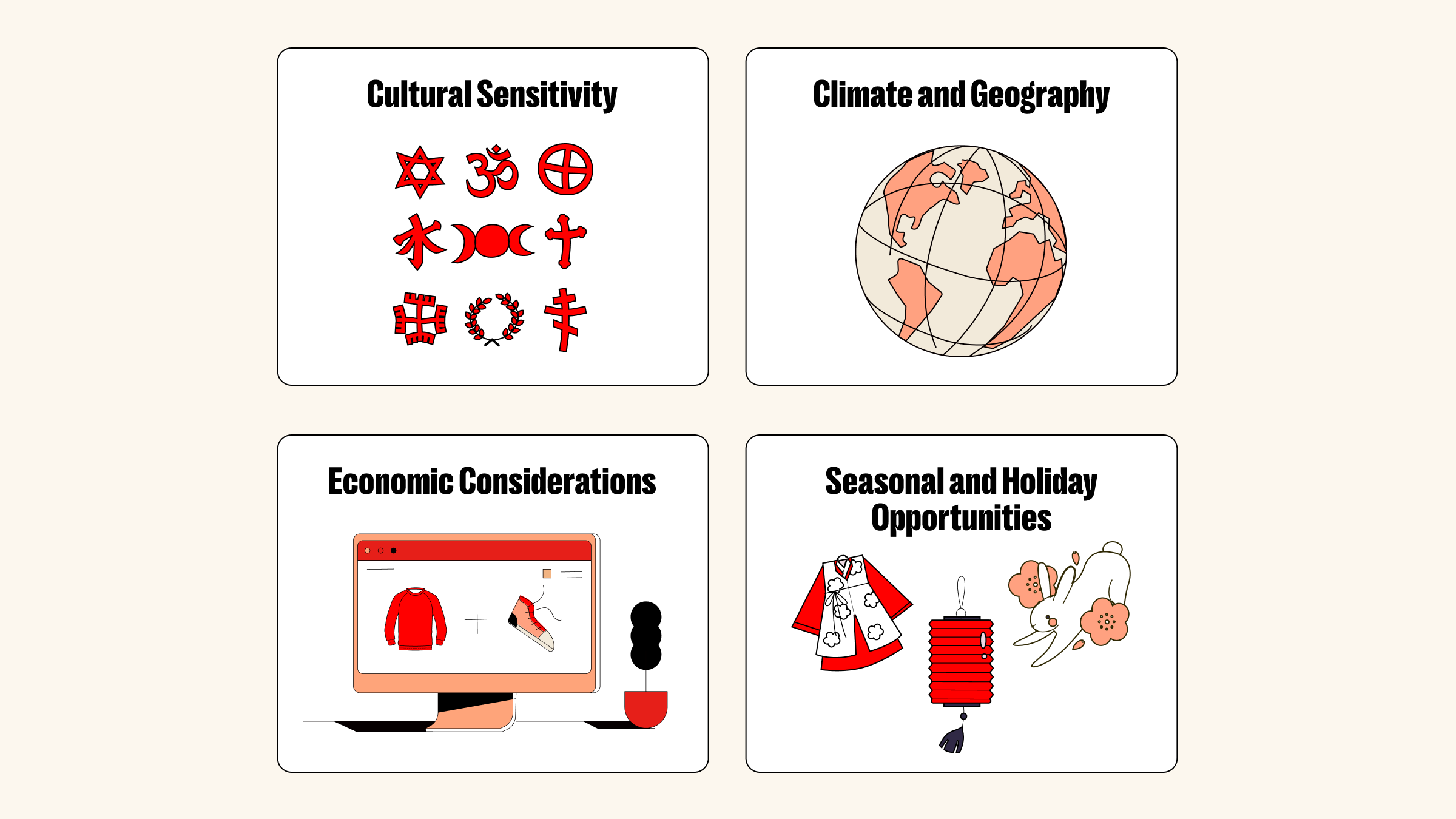
9. Pricing Strategy as Cultural Communication
Price is not just a number—it’s a message.
It communicates:
-
Positioning
-
Quality
-
Brand intent
Localized pricing considers:
-
Purchasing power
-
Competitive landscape
-
Consumer psychology
10. Logistics Expectations Vary by Culture
10.1 Shipping Time Tolerance
Some markets accept:
-
Longer shipping times
-
Lower prices in exchange
Others expect:
-
Fast delivery
-
Clear tracking
-
Reliable customer service
Your product choice must align with these expectations.
10.2 Returns and Customer Support
Return behavior differs widely.
Products with:
-
High subjective expectations
-
Size or fit uncertainty
May face challenges in markets with strict return norms.
11. Testing Products Across Cultures: The Right Way
11.1 Micro-Testing Beats Global Launches
Instead of launching everywhere:
-
Test one region at a time
-
Localize content minimally
-
Measure response before scaling
11.2 Learn From Failure Patterns
Low conversion often means:
-
Cultural mismatch
-
Messaging gap
-
Trust barrier
Not product quality issues.
12. Supplier Selection and Cultural Alignment
12.1 Product Compliance and Certification
Different markets require:
-
Safety standards
-
Labeling formats
-
Compliance documentation
Choosing products without considering this creates long-term risk.
12.2 Communication Expectations
Suppliers must support:
-
Custom packaging
-
Localization adjustments
-
Consistent quality
Not all suppliers are suitable for all markets.
13. Case Example: Same Product, Different Outcomes
A home organization product:
-
Succeeds in North America as a “space-saving solution”
-
Fails in markets where storage habits differ
Repositioned as:
-
A “seasonal organization tool”
-
A “minimalist lifestyle accessory”
It finds success again—without changing the product itself.
14. Building a Localization-First Product Strategy
Instead of:
“Which products can I sell globally?”
Ask:
“Which cultures does this product naturally belong to?”
This mindset reduces risk and increases efficiency.
15. Scaling Without Losing Cultural Sensitivity
As you expand:
-
Document what works per market
-
Avoid copying strategies blindly
-
Respect local differences
Scale systems, not assumptions.
16. Technology Helps—but Strategy Leads
Tools can analyze:
-
Keywords
-
Search volume
-
Trends
But culture explains why people buy.
Human insight still matters.
17. Long-Term Brands Think Local First
Short-term sellers chase trends.
Long-term brands build trust.
Cultural understanding transforms:
-
One-time purchases into repeat customers
-
Products into solutions
-
Stores into brands
18. The Hidden Advantage of Cultural Awareness
When you understand culture:
-
Product selection becomes clearer
-
Marketing costs decrease
-
Customer satisfaction improves
Localization is not an expense—it’s leverage.
19. Common Myths About Cross-Border Localization
-
“My product is universal”
-
“English is enough”
-
“Price beats culture”
These beliefs limit growth.
Conclusion: Culture Is the Real Competitive Advantage
Cross-border dropshipping success is not about finding the perfect product—it’s about finding the right match between product and culture.
Logistics can be optimized.
Ads can be scaled.
But culture, once ignored, is hard to fix.
By integrating cultural awareness into product selection and localization strategy, sellers move from reactive guessing to deliberate growth.
In cross-border dropshipping, the winners don’t sell everywhere—they sell appropriately.