















 En
En
 12 min read
In today’s hyper-connected global economy, cross-border e-commerce is booming like never before. The dropshipping model — where online sellers list products without holding inventory — has made it easier for anyone to sell globally with minimal upfront costs.
But while creating a store might take just a few hours, getting products delivered efficiently to international customers is where most sellers struggle.
Late shipments, unclear tracking, customs delays, and frustrated buyers can quickly destroy trust and profit margins. That’s why mastering logistics timeliness and developing a smart shipping strategy is critical for sustainable success in cross-border dropshipping.
In this comprehensive guide, we’ll break down:
-
What makes cross-border logistics unique and complex.
-
The key shipping methods used by global dropshippers.
-
How delivery time affects customer satisfaction and profit.
-
Strategies to reduce delays and costs.
-
Real-world examples of winning fulfillment systems.
Whether you’re selling on Shopify, Amazon, or your own platform, this guide will help you build a logistics system that’s fast, reliable, and scalable — the foundation of a profitable cross-border e-commerce business.
1. Why Cross-Border Logistics Is the Core of Dropshipping Success
When you run a domestic e-commerce store, logistics is relatively simple: your supplier or warehouse ships within the same country — usually within 3 to 5 days.
But once you go international, you’re facing:
-
Multiple countries and customs regulations
-
Different carriers and last-mile delivery systems
-
Currency, tax, and documentation requirements
-
Customers who expect Amazon-level delivery speed
In short: cross-border logistics can make or break your business.
A survey by Statista found that 62% of customers abandon a store after experiencing slow international shipping, and 54% expect real-time tracking updates.
That means you’re not just selling products — you’re selling a delivery experience.
2. The Dropshipping Supply Chain Explained
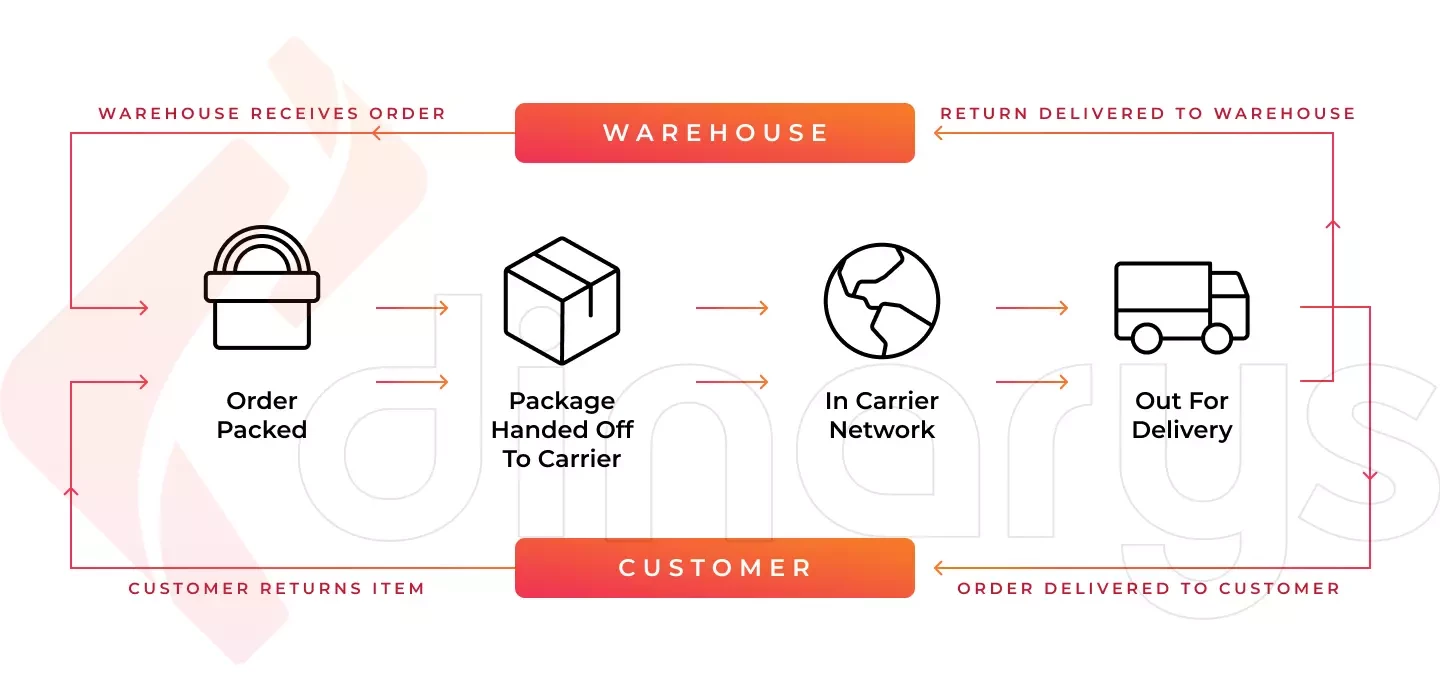
Before diving into shipping strategies, let’s review how the dropshipping logistics chain typically works.
-
Customer places an order on your online store.
-
The order is automatically sent to your supplier or fulfillment partner.
-
The supplier packs and ships the product — usually from China or another production country.
-
The carrier transports the package through international logistics channels.
-
The parcel clears customs and enters the destination country.
-
A local delivery partner completes the “last mile” to the customer’s doorstep.
Each step involves potential delays. Your job as a seller is to minimize uncertainty at every stage through better planning and reliable partnerships.
3. Common Cross-Border Shipping Methods
Not all shipping methods are created equal. The right one depends on your market, product type, and customer expectations. Let’s review the main options.
3.1 Economy Postal Services
Platforms like China Post, ePacket, and AliExpress Standard Shipping are widely used by dropshippers.
Pros:
-
Low cost — ideal for low-value items.
-
Global reach to over 200 countries.
-
Easy integration with AliExpress suppliers.
Cons:
-
Longer delivery times (10–30 days).
-
Tracking updates can be inconsistent.
-
Higher risk of customs delays.
Best for: Entry-level dropshippers testing new products or targeting price-sensitive customers.
3.2 Express Couriers
Services like DHL, FedEx, UPS, and SF Express provide faster delivery times and professional tracking.
Pros:
-
3–7 day delivery to major countries.
-
Excellent tracking visibility.
-
Lower risk of loss or damage.
Cons:
-
Much higher cost.
-
Not suitable for low-margin products.
Best for: Branded dropshipping, urgent orders, or high-value items.
3.3 Dedicated Line Logistics
These are specialized cross-border routes (e.g., China–US Line, China–EU Line) managed by logistics companies that consolidate shipments to specific regions.
Pros:
-
Balance between speed and cost.
-
Usually 7–15 days delivery.
-
Customs pre-clearance reduces delays.
Cons:
-
Availability depends on region.
-
Requires professional partners.
Best for: Growing stores scaling consistent volume to key markets.
3.4 Local Warehousing and Fulfillment Centers
Many advanced dropshippers now store inventory in local warehouses (e.g., in the US, UK, or EU) for faster last-mile delivery.
Pros:
-
2–5 day delivery, similar to Amazon Prime.
-
Reduced customs issues.
-
Easy returns and replacements.
Cons:
-
Higher upfront cost (inventory pre-purchase).
-
Need to predict demand accurately.
Best for: Established brands that want to improve customer satisfaction and compete with local e-commerce players.
4. How Shipping Time Affects Customer Experience and Profit
4.1 Delivery Speed = Trust
In e-commerce, delivery time isn’t just logistics — it’s a psychological factor.
Customers feel anxious when they don’t receive updates or when tracking is unclear. Long delivery times can result in:
-
Refund requests
-
Negative reviews
-
Lost repeat business
A 2024 Shopify survey revealed that 48% of consumers expect delivery within 7 days, even for international orders.
If your shipping takes 20 days or more, you must manage expectations upfront or risk losing credibility.
4.2 The Hidden Cost of Delays
Let’s imagine two stores:
| Store | Avg. Delivery Time | Refund Rate | Monthly Profit |
|---|---|---|---|
| Store A | 7 days | 3% | $10,000 |
| Store B | 20 days | 12% | $6,000 |
The slower delivery not only causes refund losses — it also reduces ad efficiency, as unsatisfied customers hurt your brand’s trust.
4.3 Shipping Speed vs. Pricing Strategy
Sometimes, charging a small premium for faster shipping actually increases conversion rates.
Example: Offer two options —
-
Standard (Free, 14–20 days)
-
Priority (Extra $4.99, 7–10 days)
Data shows that up to 35% of customers choose paid priority shipping — covering the cost difference and improving profit margins.
5. Factors That Impact Logistics Timeliness
-
Supplier Handling Time – How fast the supplier packs and hands off parcels.
-
Carrier Efficiency – Some carriers handle customs better than others.
-
Destination Country Customs – Stricter customs = longer clearance times.
-
Holidays and Peak Seasons – Black Friday, Christmas, or Chinese New Year can cause major backlogs.
-
Product Type – Restricted or battery-powered goods often face inspection delays.
-
Incorrect Addresses – Simple customer errors can result in weeks of delay.
Your role is to anticipate and plan around these variables.
6. Practical Strategies to Improve Shipping Timeliness
6.1 Choose Suppliers with Local Warehouses
Many Chinese suppliers on platforms like CJ Dropshipping, 1688, or Alibaba now operate overseas warehouses.
For example:
-
CJ US Warehouse → 2–7 day delivery to American customers.
-
EU Warehouse → 3–10 day delivery across Europe.
Working with such suppliers helps eliminate cross-border clearance issues entirely.
6.2 Work with a Professional Logistics Partner
Instead of relying on AliExpress-standard shipping, build a relationship with a dedicated logistics agent.
They can:
-
Recommend the best route for each country.
-
Pre-clear customs for faster processing.
-
Offer real-time tracking and insurance options.
A professional 3PL (third-party logistics) partner can save you weeks of delay and countless headaches.
6.3 Implement Order Processing Automation
Use Shopify or WooCommerce plugins to automatically push orders to suppliers and track status updates.
Automation reduces manual errors and ensures every order ships within hours, not days.
Popular tools include:
-
DSers (for AliExpress)
-
AutoDS
-
CJdropshipping App
-
ShipStation
6.4 Offer Transparent Tracking
Don’t make customers chase their package. Integrate real-time tracking directly on your store using apps like 17TRACK or Parcel Panel.
You can even set up automated email updates:
“Your order has cleared customs and is now on its way!”
Proactive communication reduces refund requests and boosts satisfaction.
6.5 Optimize Product Selection
Heavy, fragile, or battery-powered products often face longer customs checks.
Choose products that are:
-
Lightweight
-
Non-sensitive (no liquid, magnets, or batteries)
-
Easy to package
Fast-moving, easy-to-ship products lead to faster fulfillment and fewer headaches.
6.6 Pre-Test Your Logistics Routes
Before launching a product, order it yourself from the same supplier and shipping method. Track how long it actually takes.
That data becomes your benchmark for advertising and customer communication.
6.7 Prepare for Peak Seasons
Plan your logistics calendar ahead of major shopping events.
| Season | Risk | Preparation Tip |
|---|---|---|
| Chinese New Year | Factory shutdowns | Stock in advance or use non-China suppliers |
| Black Friday / Cyber Monday | Carrier overload | Use premium routes |
| Christmas | Customs congestion | Ship early and communicate cut-off dates |
Proactive planning protects your store from seasonal chaos.
7. Balancing Cost and Speed
The eternal question for dropshippers: Should I pay more for faster shipping?
The answer depends on your brand positioning:
-
Budget Store: Prioritize low cost; communicate slower delivery clearly.
-
Mid-Range Store: Offer a balance — free standard + optional express.
-
Premium Brand: Always provide fast, reliable shipping; it’s part of your value.
A good rule of thumb:
Delivery time under 10 days feels “professional.”
Over 15 days feels “cheap.”
If you charge premium prices, your logistics must match your brand image.
8. Managing Returns and Lost Packages
Even with perfect planning, returns and lost parcels happen — especially in cross-border trade.
8.1 Have a Clear Policy
Publish a transparent return and refund policy. Make it easy for customers to understand timelines and conditions.
Example:
“If your package hasn’t arrived within 30 days, please contact us for a free reshipment or full refund.”
8.2 Use Tracking-Backed Disputes
If a customer claims “item not received,” proof of delivery from tracking data can protect your revenue.
8.3 Consider Local Return Centers
Advanced sellers use 3PL return centers in major markets (US, UK, EU) to handle reverse logistics — reducing customer friction.
9. Case Study: How Fast Logistics Boosted Profit
Brand: “GlowZen Skincare”
Market: US + EU
Product: LED facial mask
Phase 1 – Standard ePacket Shipping (20–25 days)
-
Average refund rate: 10%
-
Customer rating: 3.8/5
-
ROAS: 1.9x
Phase 2 – Switched to EU/US Local Warehouses (3–7 days)
-
Refund rate dropped to 2%
-
Customer rating improved to 4.7/5
-
ROAS increased to 3.6x
-
Profit up by 45%
Takeaway: Faster delivery doesn’t just make customers happy — it multiplies your marketing efficiency and profitability.
10. The Future of Cross-Border Dropshipping Logistics
The logistics world is evolving fast. Emerging trends include:
• Global Fulfillment Networks
Platforms like Shopify Fulfillment Network, ShipBob, and CJdropshipping Global Warehouses are connecting suppliers and warehouses worldwide, enabling Amazon-like speed for independent sellers.
• AI-Powered Route Optimization
Machine learning helps predict customs delays, select best routes, and dynamically reroute shipments based on real-time congestion.
• Green Shipping Solutions
Sustainability is rising in importance. Eco-friendly packaging and carbon-neutral shipping options attract eco-conscious consumers.
• Localized Fulfillment Partnerships
Instead of a single global supplier, brands partner with regional warehouses to maintain faster local delivery in key markets.
• Integration with Live Tracking and CRM
Customers expect end-to-end visibility — modern stores integrate tracking with CRM tools like Klaviyo or Gorgias for seamless support.
11. Building a Long-Term Shipping Strategy
To scale your business sustainably, treat logistics as a strategic investment, not a cost.
Here’s a long-term roadmap:
-
Stage 1: Start with AliExpress/ePacket while testing products.
-
Stage 2: Partner with private agents for better speed and reliability.
-
Stage 3: Transition best-selling SKUs to dedicated line shipping.
-
Stage 4: Establish local warehouse fulfillment in key markets.
-
Stage 5: Automate order management, tracking, and inventory forecasting.
This progression ensures that your logistics grow alongside your sales volume — not against it.
12. Pro Tips for Cross-Border Dropshipping Logistics
✅ Always test multiple routes and compare real delivery times.
✅ Keep your shipping policy transparent on every product page.
✅ Collect tracking numbers automatically — don’t rely on suppliers to send them manually.
✅ Use branded tracking pages for professionalism.
✅ Offer delivery insurance or reshipping guarantees.
✅ Maintain communication during delays — silence destroys trust.
Remember: shipping isn’t just about delivery — it’s a reflection of your brand’s reliability.
Conclusion: Fast, Reliable Logistics = Competitive Advantage
In the global dropshipping landscape, your logistics strategy is your true differentiator.
While competitors race to undercut prices, smart sellers focus on what really matters: delivering a consistent, satisfying experience to every customer, regardless of where they live.
A strong logistics foundation gives you:
-
Faster delivery and happier customers.
-
Lower refund and dispute rates.
-
Better ad efficiency and brand reputation.
Dropshipping is no longer just about listing products — it’s about building a global fulfillment system that runs smoothly and profitably.
So take the time to optimize your logistics. Because in cross-border e-commerce, speed isn’t just an advantage — it’s survival.