
















 En
En
 12 min read
In the world of cross-border e-commerce—whether you’re selling on Amazon, running a Shopify store, or operating on platforms like TEMU, SHEIN, or TikTok Shop—there’s one thing you simply can’t ignore: product selection.
Choosing the right product is the lifeline of your entire business.
You might be a master at running ads, have sharp operational skills, or even be ready to throw money at the problem—but if the product is wrong, none of that will matter. A bad product means no sales, inventory piling up, ad budget going to waste, and cash flow drying up. Best case? You lose money and exit the game. Worst case? Your company goes under.
But if you pick the right product? Even if you’re just starting out—with little experience and a limited budget—you still have a real shot at turning a single product into tens of thousands, or even hundreds of thousands of dollars in profit. That’s what we mean when we say: “It’s the product that makes you take off.”
So don’t treat product selection as just a step in the process.
What is Google Trends?
If you want to know whether a product is truly “riding the wave,” then Google Trends is a tool you simply can’t afford to ignore.
It’s a free data platform officially launched by Google, designed specifically to track how users across the world behave on the Google search engine.
Put simply, it’s a powerful trend analysis tool that shows what people are searching for, when they’re searching for it, and where those searches are most active.
A lot of beginners think “trends” just means looking at what’s popular right now.
But the truth is, Google Trends offers way more than that.
It allows you to see how search interest for a keyword has changed over the past few days, months, or even years.
You can quickly identify whether the term has seasonality, is in a growth phase, or if it’s already past its prime.
For example, search “Halloween costume,” and you’ll see it spikes every year in late September and crashes after October—a classic seasonal trend.
Search “fidget spinner,” and you’ll find it exploded for a brief period and vanished just as quickly—a textbook short-lived viral product.
Beyond tracking the search trend for a single keyword, you can even compare multiple keywords side-by-side to decide which product deserves more of your attention and investment.
Let’s say you’re torn between “solar fountain” and “solar garden lights”—Google Trends gives you a crystal-clear view of their long-term performance and geographic differences.
Even better, Google Trends can break things down by country, region, or even city.
You might discover that while a product isn’t too hot in the U.S. overall, it’s trending big in states like California or Texas.
Or maybe a seemingly niche product is quietly blowing up in Germany or Australia.
This is gold for sellers doing localization, running multi-country stores, or selling across different platforms.
How to Use Google Trends for Product Research
A lot of people know about Google Trends, but very few actually know how to use it to find products that sell.
No matter how powerful the tool is, if you don’t know how to use it right, it’s pointless.
So here’s a simple and practical 5-step process you can follow—no fluff, no fancy talk, just what works.
Step 1: Search with English keywords
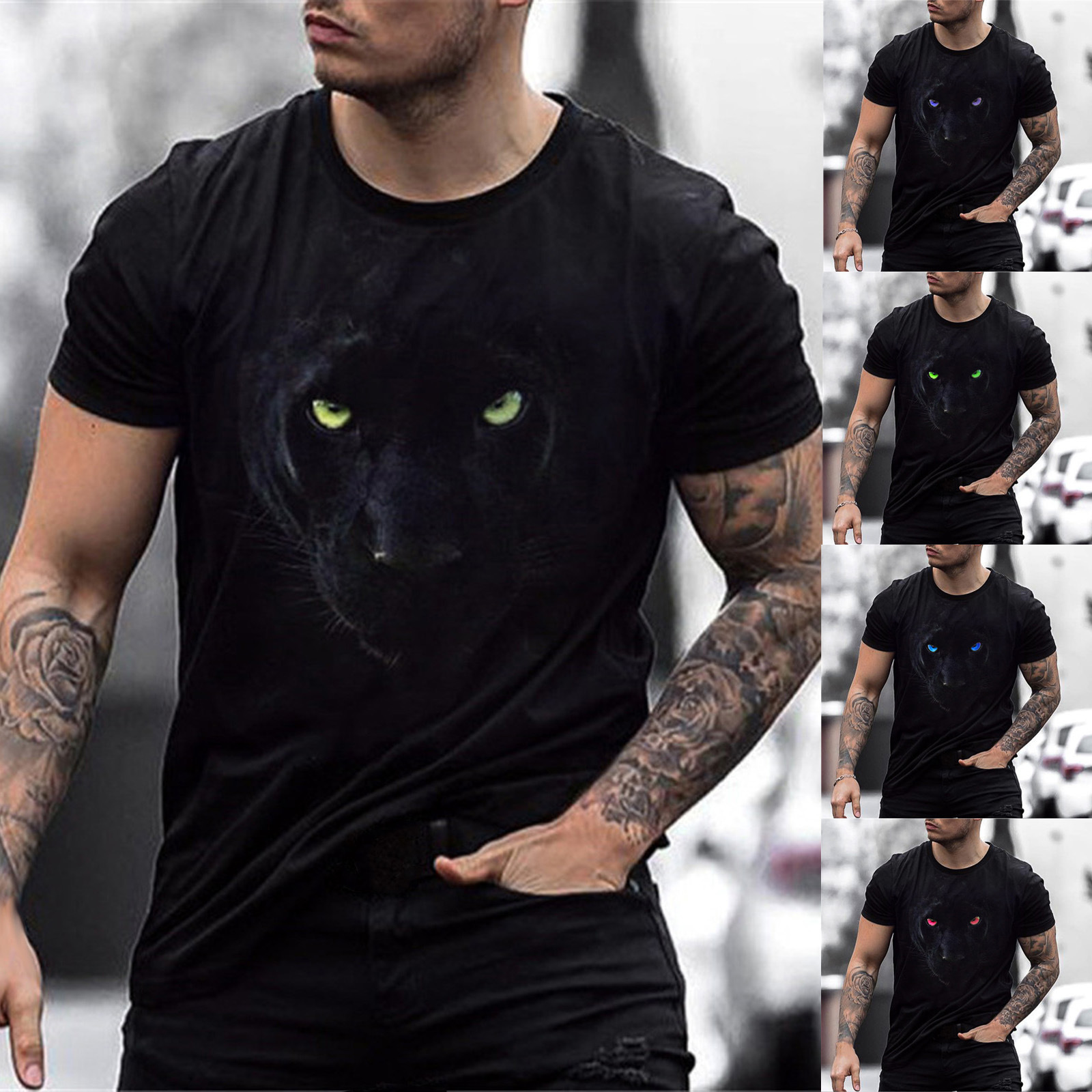
For example, if you’re planning to launch Valentine’s Day-themed T-shirts, try searching for:
valentine shirt
https://trends.google.com/trends/explore?q=valentine%20shirt&geo=US
-
If the trend chart shows a clear upward spike during a specific time (e.g., late January to mid-February every year), it means the product has strong seasonal demand
If the search interest is higher year-over-year, that’s a sign this is a scalable, growing niche
Step 2: Compare Multiple Keywords
Once you’ve locked in a general direction—say, Valentine’s-themed apparel—your next challenge is to get more specific:
Should you sell T-shirts, hoodies, or hats?
Don’t guess. Don’t go with your gut. Use Google Trends to compare keywords and make data-backed decisions.
Let’s take a real example. You’re torn between valentine shirt and valentine hoodie. Just plug both into Google Trends at the same time.
The system will generate two separate trend lines in different colors, showing you how the popularity of each term has changed over time.
Here’s what you need to focus on:
1. Which one has higher overall interest?
More interest = more searches = stronger demand.
If valentine shirt clearly has higher search volume than valentine hoodie, that means T-shirts are more likely to reach a larger audience—and your ad spend will likely generate better returns.
2. Which one has a more stable curve?
Some products spike like crazy just one week before the holiday, but burn out fast.
Others may not hit massive peaks, but stay in demand longer.
A smoother, longer-lasting curve means you can launch earlier, keep running ads longer, and don’t need to rely on last-minute urgency to drive sales.
3. Which one is growing faster?
If you notice that valentine hoodie has started climbing much faster than valentine shirt over the past year—even if the total volume is still lower—it could be a fast-rising opportunity with breakout potential.
This kind of keyword comparison is basically data showing you which category has not just the present, but also the future.
Some products are already popular but might be past their prime. Others are just getting started—but if the trend is rising, getting in early could mean you catch the first wave of traffic before the crowd shows up.
Step 3: Check “Related Queries” for Inspiration
Once you plug a keyword into Google Trends, don’t rush to close the page—the real gold is further down!
Google Trends has two hidden gem sections: “Related Topics” and “Related Queries”.
These two areas are absolute treasure troves for product research.
Let’s say you searched for garden fence screen. Scroll down and you’ll see a bunch of keywords that are closely related to your search, but maybe you never thought of them before—like:
-
privacy screen outdoor
-
mesh shade for backyard
-
sun shade screen for patio
These keywords are auto-generated based on real user search behavior.
In plain English: this is exactly what customers are typing into Google.
It helps you unlock new product ideas, expand your product line, enrich your ad copy, or even tap into new sub-niches.
For example:
You were originally just planning to sell garden fence screens.
But after seeing “privacy screen outdoor”, you might get the idea to develop a product that emphasizes privacy protection for outdoor spaces.
Seeing “mesh shade for backyard” could inspire you to explore sunshade mesh solutions.
And “sun shade screen for patio”? That’s practically a new product series ready to launch.
What’s even cooler is that each of these related queries reflects a different customer pain point or priority.
Step 4: Set the Right Country & Time Range
When using Google Trends for product research, don’t just focus on one country, and definitely don’t rely on just the past few days’ data.
If you use the wrong dimensions, your insights will be no better than random guesses.
To really get valuable insights, you need to master two things:
Set the right country and extend your time range.
Let’s start with the country.
Google Trends lets you view search data from different regions. You can easily switch between:
-
United States (US)
-
Canada (CA)
-
United Kingdom (UK)
-
Australia (AU)
-
And even Germany, Japan, France, South Africa…
Dozens of countries are available.
Why bother switching countries?
Because user behavior differs wildly across markets.
For example:
You’re targeting the US market, but if you notice your chosen keyword is also gaining traction in the UK and Australia, that could be a green light to sync your ad strategy and product launches across multiple regions.
On the flip side, if you see that a certain niche is barely getting searched in Canada, then you can avoid wasting ad spend there. Smart move, right?
Let’s take a real-world example:
You search for a gardening-related keyword and see that in the US, interest spikes every year from April to June.
That tells you one thing:
You should start prepping in March—get your listings live, content ready, ads running—so that you’re already visible when search volume shoots up.
If you wait until the trend peaks to act, it’s already too late.
By then, competition is intense, and traffic is already snapped up.
Step 5: Validate with Product Research Databases
Google Trends can show you whether a product has consistent growth or seasonal spikes in interest, but remember—search popularity doesn’t guarantee sales.
It simply points you in the right direction.
To truly minimize risk and move toward execution with confidence, you need to double-check using product research databases—to see if people are actually spending money on the product and if the supply chain is reliable.
Start by using tools like Sell The Trend, Minea, or Koala Inspector.
These platforms let you visually track what products other sellers are actively advertising, and what keywords they’re using.
They scrape ad creatives from Facebook, Instagram, TikTok, and other platforms, and show you which products have high ad impressions, click-through rates, and engagement (like comments).
For example:
If you see a keyword trending upward on Google Trends, and then search that product in one of these tools—
-
If you find almost no one is running ads for it, that’s a red flag. Proceed with caution.
-
But if you find dozens of stores already investing heavily in ads, and the engagement data looks promising—that’s a clear sign the market is heating up.
Put simply:
Trends shows you interest. Ad spy tools show you money in motion.
Combine both, and your product decisions will be based on real signals, not just gut feelings.
Conclusion
There’s no shortcut to picking winning products, but trends are like your top-level map.
They won’t directly tell you “which product will explode,” but they will show you where the wind is blowing.
In today’s fast-paced world, where platforms update at lightning speed,
if you pick products based on gut feeling or guesswork, by the time you realize it, the category has already turned into a bloody red ocean.
The truly smart sellers have already set up their supply chains, created differentiation, and even launched their first wave of ads before the hot product even appears.
So, treat Google Trends as your radar.
It’s cheap, it’s easy, but it’s incredibly valuable.
As long as you jump in when the trend is just starting, move fast, and execute hard—
you’ll be a half-step ahead of everyone else making money.