
















 En
En
 9 min read
In today’s fiercely competitive cross-border e-commerce landscape, advertising costs are soaring, and acquiring new customers is becoming increasingly expensive. If you’re a dropshipping seller looking to boost profits without blindly increasing your ad budget, then increasing your Average Order Value (AOV) is one of the most worthwhile optimization strategies you can invest in.
This blog will break down in detail:
● What AOV is and why it’s critical for profitability
● 6 practical strategies to increase AOV
● Tool recommendations and real case studies
● Data references and actionable tips
What is AOV?
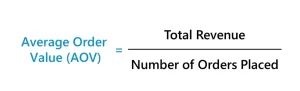
AOV stands for Average Order Value. It refers to the average revenue generated from each customer order and is a key metric for evaluating your store’s profitability.
The formula is quite simple:
Total revenue during a given period ÷ Total number of orders = AOV
For example, if your store made $10,000 in revenue this month from 200 orders, your AOV would be:
$10,000 ÷ 200 = $50
That means, on average, each order brought in $50 of revenue.
Why Increasing AOV Is Essential for Your Business
Increasing AOV is not just a fancy trick — it’s a key metric in e-commerce operations that directly impacts profit, efficiency, and sustainable growth. Here are four core reasons why you should focus on boosting your AOV right now.
Increase Profit Without Raising Order Volume
First, increasing AOV means you can boost overall profit without needing to increase the number of orders. You don’t have to rely on “fake orders” or price wars to push volume — simply getting customers to buy a bit more each time will expand your profit margin. This is especially practical and direct leverage for sellers with inventory pressure or limited operational resources.
Lower Advertising Cost Ratio and Improve ROI
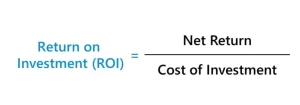
It’s a well-known fact that advertising is getting more expensive. For example, if you spend $5 to acquire a customer who only places a $20 order, the ad cost may eat up your profit. But if you use bundling or upselling strategies to get them to place a $50 order, that $5 acquisition cost suddenly looks much more efficient. With the same customer acquisition cost, the higher the AOV, the more cost-effective your investment.
Fixed Costs Are Easier to “Dilute”
Whether you sell 1 order or 100 orders a day, many costs remain fixed — customer service, warehouse rent, packing labor, system subscriptions, etc. When your average order value rises and more products are sold per order, these fixed “rigid expenses” get spread over higher sales, naturally improving your overall gross margin.
Highly Correlated with Customer Lifetime Value (CLV)
Customers who frequently place large orders usually represent stronger spending power, higher trust, and greater repurchase intention. High AOV customers are often high CLV customers. By increasing AOV, you’re not just earning from a single order — you’re effectively increasing the customer’s long-term value and even elevating your brand positioning.
Practical Strategies to Increase AOV
If you want to raise your Average Order Value (AOV), you can’t just rely on guessing or random ideas. Instead, you need solid, actionable strategies to guide customers into spending more. Here are six highly practical and effective methods to boost AOV, each can be directly applied to your e-commerce store—especially suitable for sellers of physical products like you.
Product Bundling
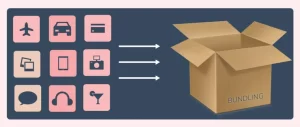
The core of this strategy is to combine complementary products into a “bundle price,” encouraging customers to buy more in one purchase. For example, if you sell privacy fence screens, you can bundle zip ties, installation nails, or storage bags into an “Outdoor Installation Kit,” which is convenient for customers and increases AOV.
Many customers don’t want to search for accessories one by one, so bundling can actually improve conversion rates. I recommend tools like Bundler – Product Bundles or Bold Bundles, which are easy to use and look great on your store.
Upsell
This strategy mainly happens at checkout—it’s the golden moment in the customer’s shopping journey. You can set pop-ups saying, “Add $9.99 more to get an exclusive clamp + sunshade fabric.” Many customers at checkout are willing to pay a bit extra for a better experience.
Recommended plugins: ReConvert Upsell, Zipify OCU—both support recommendations on checkout or order confirmation pages.
Cross-sell
Don’t just focus on selling the same product; give users matching suggestions. For example, if a customer buys a T-shirt, recommend a baseball cap, tote bag, or socks to create a “style set.” Most users are willing to buy one or two more for convenience or a complete look.
Recommended tools: Frequently Bought Together, Also Bought—these automatically learn and generate common combos.
Threshold Discounts
Customers love “order bump” deals. Set offers like “Get $10 off when you spend $60” or “Free shipping over $49” to encourage customers who originally planned to spend $40 to add a little more. Though it looks like a discount, it’s actually more cost-effective because shipping and AOV improve simultaneously.
Recommended tools: Use Shopify’s built-in Discount system or third-party apps like Honey App.
Time-Limited & Volume Discounts
Combining “limited time + buy more save more” is a highly efficient combo. For example, “Buy 2 items today, get 10% off; buy 3 items, get 20% off.” This not only creates urgency but also encourages customers to buy more at once, greatly boosting your average order value.
Recommended tools: Volume & Tiered Pricing apps, which allow flexible rule settings and display options.

Loyalty Program & Points Incentives
To increase AOV and customer repeat purchases in the long run, you must introduce membership and points systems. For example, “Get a coupon for orders over $100,” or “Points redeemable for gifts or discounts on next purchase.” Customers are more willing to spend more to “unlock rewards.”
Recommended platforms: Smile.io and LoyaltyLion—both are veterans in user loyalty and reward programs.
Real Data Reference
| Strategy Type | AOV Increase Range |
|---|---|
| Product Bundling | +10% to +25% |
| Upsell at Checkout | +15% to +30% |
| Smart Cross-sell | +8% to +15% |
| Threshold Discounts (Free Shipping / Spend to Save) | +10% to +40% |
| Loyalty / Points Program | +5% to +12% |
Combining multiple strategies often leads to even more significant results.
Summary & Recommendations
At the end of the day, boosting AOV isn’t about “magic tricks” or clever hacks — it requires a systematic, structured combination of strategies. Here are some practical tips you can start implementing in your store right away:
● Deeply analyze your store’s best-sellers and focus on upselling and bundling around these core products.
● Identify your most popular products — treat them as your “profit engines.” Design accessories, add-ons, or upgraded versions to bundle with these main items, directly increasing the average order size. Set reasonable threshold discounts to trigger customers’ “add-on impulse.”
● Free shipping over $49? $10 off over $75? Don’t set these thresholds too high, but just enough so customers feel they’re “almost there,” encouraging them to buy more willingly. Remember: most people love the thrill of completing their cart.
● Deploy upsell plugins at checkout — this is when customers are most ready to spend a little extra. Suggest related small items or upgrades; even adding $5 more per order is squeezing out additional profit. Build a long-term mechanism with loyalty and points programs to lock in repeat buyers.
Increasing AOV once is good, but turning customers into long-term users is where sustainable growth happens. Points, coupons, VIP programs — all these effectively encourage repeat purchases and bigger orders, saving you from chasing new customers endlessly.
If you’re a Dropshipping seller, AOV is even more crucial. Simply put, your profit margins are already slim, and you can’t rely on bulk discount purchasing — so your only way to stay profitable is to make more from each single order. Since Dropshipping heavily depends on ads, the higher your AOV, the better your advertising ROI (ROAS) and the lower your cash flow pressure.
You don’t need more traffic or extra customer support. Just guide your existing customers to open their wallets a bit wider, and you can turn a $25 order into $45, $60, or even more. Making tens of dollars more per order adds up significantly over time.
So start now — try a product bundle, set a threshold discount, or add an upsell at checkout. You’ll find boosting AOV isn’t just a nice-to-have — it’s one of the core drivers of your growth.